U225X / ENGINEERING UNWARRANTED
R.H.H. Debossing Stamp / Mirror the Mark
Public record / MDL-RHH-STAMP-001 / Revision A
U225X
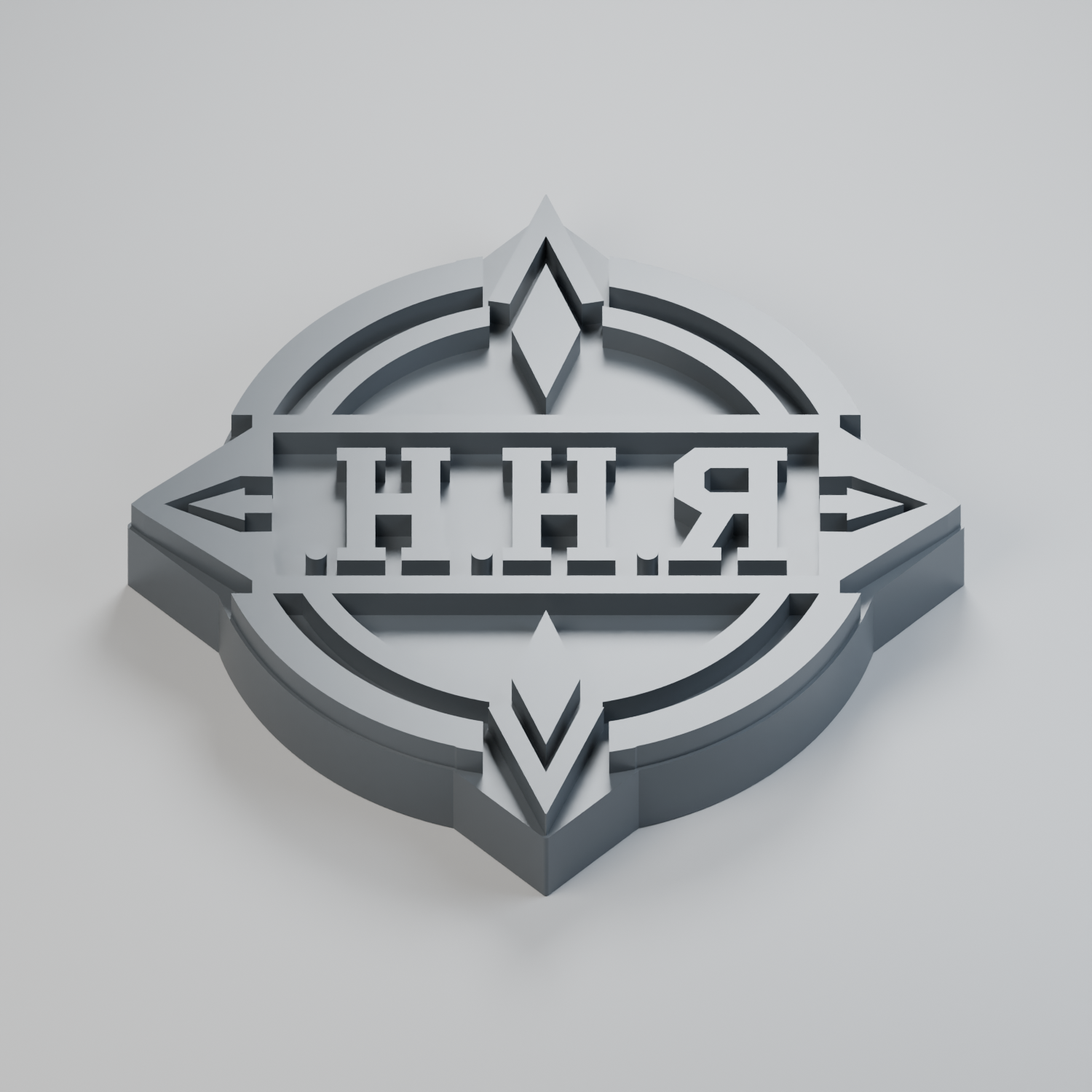
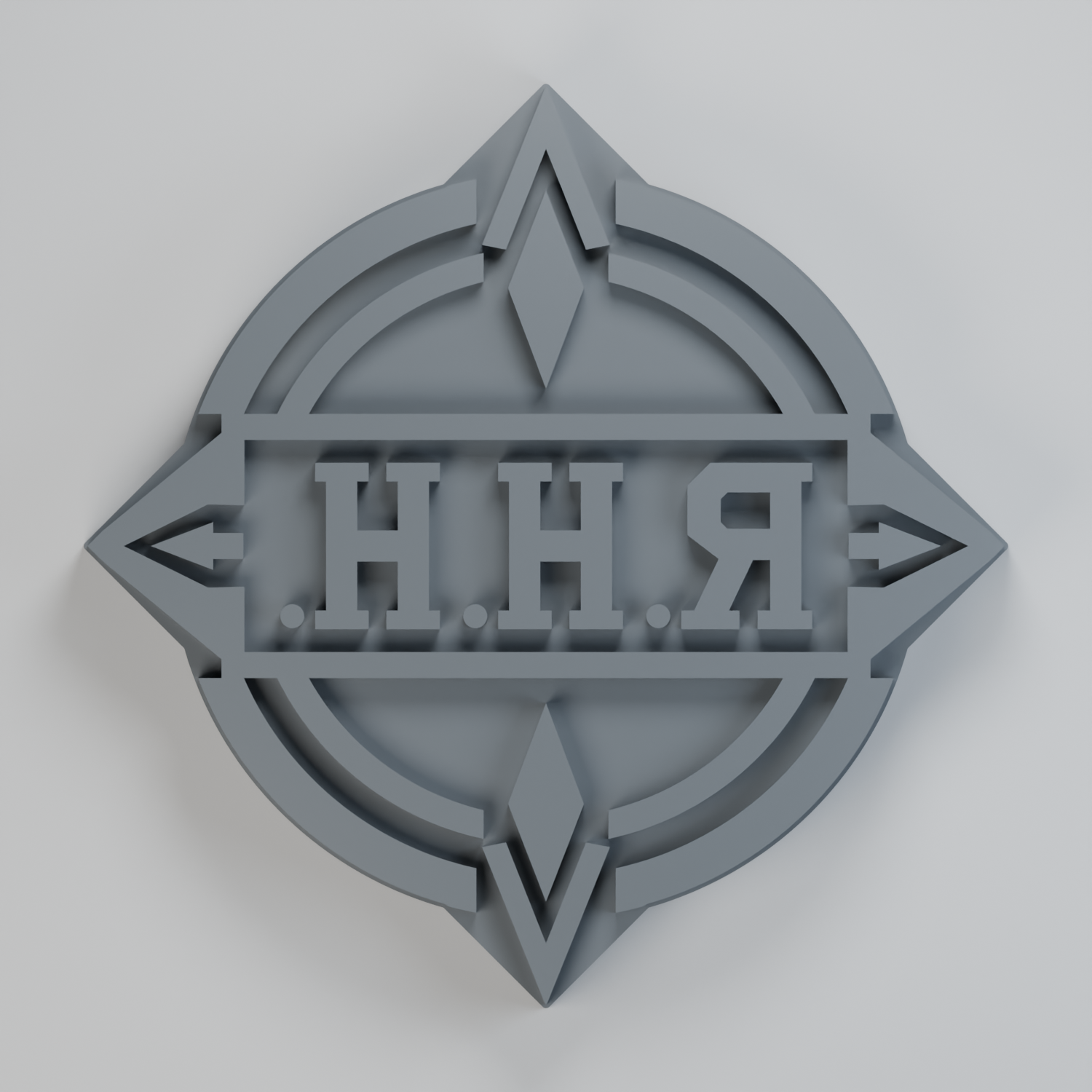
The stamp was reconstructed from a supplied perspective image, then modeled as a printable solid. Its lettering is mirrored so the impression can read R.H.H. The raised initials, punctuation, and compass detail meet at the same contact plane. The STL, editable Blender project, print notes, and two model renders are available here. No physical impression is documented yet.
TECHNICAL NOTES
A 3.5-inch stamp built around mirrored R.H.H. initials and a compass-like mark, with a flat backing and raised contact surfaces.
BUILD STORY
A stamp has to work in reverse: the model carries the mirrored image so the mark left behind can read normally.
The starting reference was a perspective image. Rebuilding it required interpreting the shapes rather than tracing a clean flat vector file. The compass-like frame, initials, and punctuation were made into editable pieces before the final solid was assembled.
The overall envelope was set to 3.5 inches square and half an inch high, including the raised artwork. A 9.2 mm backing supports the 3.5 mm relief. The contact surfaces were kept coplanar so the design has a consistent intended stamping face.
The R.H.H. lettering was mirrored. The straight-on render is useful here: it shows what the actual tool face looks like, while the intended impression reverses it again.
The saved model checks describe one connected watertight solid. The supplied STL is the printable export; the Blender file also contains the editable source pieces and presentation setup. Import the STL in millimeters and check 88.9 × 88.9 × 12.7 before slicing.
The missing part is the physical impression. A first test should record the material being stamped, the print settings, and whether the small details release and read cleanly. Until then, the renders show a model rather than a proven stamp.
SPECIFICATION
FIELD IMAGES 02 ATTACHED
NEXT TO ADD
- Photo of the printed stamp.
- Test impression showing that the initials read correctly.
- Stamping material, printer/filament settings, and notes on detail release or wear.