Home cooling and thermostat troubleshooting
The recovered conversation separates house heat gain from an HVAC performance problem. The useful pattern is an indoor temperature rise during the hottest afternoon hours while the AC runs continuously, with an unused attic fan and questionable airflow as the first things to investigate. The record keeps the checks ordered so a filter, condenser, window-heat, attic, or airflow issue is not confused with a refrigerant or equipment diagnosis.
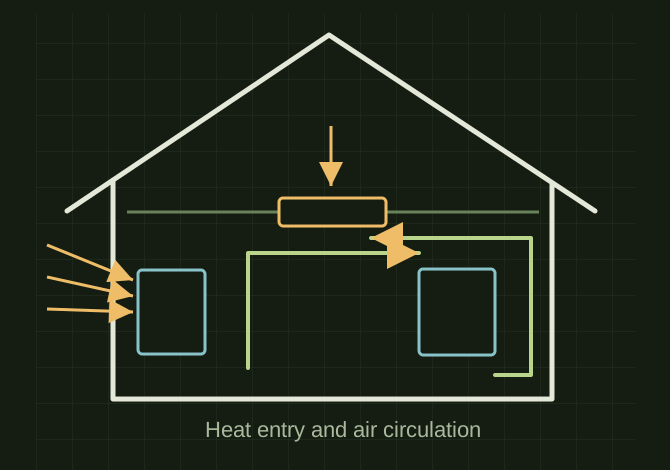
Follow heat coming in and air moving through
 OPEN FULL SIZE ↗
- Envelope
- Windows and attic opening
- Airflow
- Filter, return and supply
- Equipment
- Condenser and system inspection
TECHNICAL NOTES///
Public-safe cooling troubleshooting path for an afternoon temperature rise and an AC that runs for hours without catching up.
GOALSeparate heat gain and airflow problems from an equipment fault using safe observations and one temperature-split check.
EQUIPMENT
- Return-air and supply-air thermometer
- Replacement filter matched to the system
- Notebook or phone photo record
- Qualified HVAC service when the safe checks point to equipment
STEPS
- Seal and insulate the unused attic/whole-house fan before chasing smaller comfort changes.
- Check the filter and replace it if dirty or overly restrictive; do not run the system without a filter.
- Confirm the outdoor condenser fan is running and the coil is clear of grass, fuzz, and debris.
- Close west- and south-facing blinds before the afternoon heat arrives and use ceiling fans only in occupied rooms.
- Pre-cool modestly before the heat peak instead of setting the thermostat sharply lower after the house is already hot.
- Measure return-air and nearby supply-air temperature after the system has run 15–20 minutes.
- Record the result and use qualified service for refrigerant, electrical, coil, duct, or other safety-critical work.
TROUBLESHOOTING
- A 15–20°F supply-to-return difference can be a useful clue, but it is not a complete diagnosis.
- If the temperature split is reasonable while the house still gains heat, investigate insulation, air leakage, windows, and the attic opening.
- If the split is unusually small, stop guessing and have the system inspected for airflow, coil, duct, or refrigerant problems.
- Do not place a box fan directly against a supply register until its effect on system airflow is understood.
SAFETY / LIMITS
- Do not cover an attic or whole-house fan until it cannot be accidentally switched on.
- Do not open refrigerant circuits or work inside energized HVAC equipment without qualified service.
- Treat the temperature check as an observation, not proof that a component is safe to replace or bypass.
RESULTRecovered conversation-based troubleshooting path; it narrows the next check without claiming a confirmed HVAC diagnosis.
DEVELOPMENT HISTORY///
Recovered and summarized from the supplied Attic Fan Heat Barrier conversation; raw transcript remains unpublished.
SPECIFICATION///
RELEASED MATERIAL///
Recovered conversation-based troubleshooting path; it narrows the next check without claiming a confirmed HVAC diagnosis.
The record keeps what is known at this revision. Unfinished tests stay unfinished here.