A conversation-specific public summary of aquarium 3d printing materials, distilled from the supplied export. The detailed excerpts remain available in the released note file.
CHAT-0066REV EXPORT-03
AI narration using Robert's voice. Aquarium 3D Printing Materials / short introduction.
Conversation-specific knowledge extracted from the aquarium 3d printing materials discussion.
EXTRACTED KNOWLEDGE / HOW-TOFROM CONVERSATION
QUESTION / CONTEXTWhat do you recommend i print aquarium items out of
IMPORTANT GUIDANCE
For aquarium items, PETG is my first choice, especially with your Creator 5 Pro.
It’s a much better fit than standard PLA for parts that will stay submerged long-term.
| Material | Aquarium use | Recommendation | |. |. |. | | PETG | Submerged decorations, caves, holders, brackets | ⭐ Best overall | | ASA | Tank equipment, especially around UV/light | ⭐ Excellent, but harder to print | | PLA | Decorations/temporary parts | ⚠️ Usually okay short-term, not my first…
PETG handles constant water exposure well and is easy to scrub.
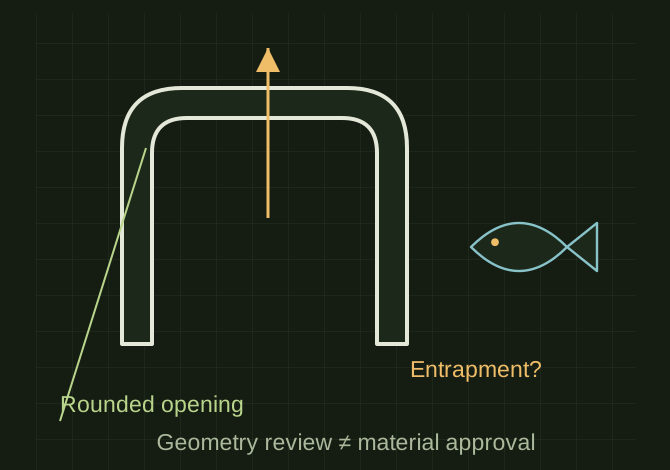
For anything the fish can rub against, round all edges and avoid tiny gaps where a fish could get trapped.
One important distinction: the base plastic may be suitable, but pigments/additives vary by filament manufacturer.
I would avoid mystery filament, metallic/glitter additives, antibacterial filament, glow-in-the-dark, and anything containing copper or other potentially leachable additives.
For prints such as caves, tunnels, plant anchors, filter guards, feeding rings, air-stone holders, or custom aquarium structures, I'd generally use 4 walls, 20–30% infill, and enough top/bottom layers to make a solid shell.
Extracted from the conversation’s assistant responses and edited for public clarity. See the released note for additional redacted excerpts.
DEVELOPMENT HISTORY///
2026.07.24EXPORT-04
Matched to the supplied export; key guidance is surfaced separately and the raw transcript remains unpublished.
 OPEN FULL SIZE ↗